


Nonprofit grants have been making headlines in 2025. Whether it’s federal funding freezes or flagging DEI content, so many changes so quickly can make you wonder: Is it still worth investing in a grant fundraising strategy?
Here at Funding for Good, based on our collective decades of fundraising experience, our answer is yes.
Grant funding is still vital and valuable for nonprofit organizations. But having a smart grants strategy is more important than ever.
The Five Key Elements of a Grant Fundraising Strategy
A successful grant fundraising strategy doesn’t have to be complicated—even in today’s uncertain environment.
The most effective grant funding programs are built on a few basic activities performed consistently.
This consistency is the key to grant funding success.
Consistency helps you create a robust grant funding pipeline, build lasting funding relationships, and secure long-term sustainable funding for your organization.
Whether you’re setting out to raise $50,000 or $50 million, you will need to:
- Set clear and achievable grant fundraising goals.
- Seek out well-matched grant funding prospects.
- Prioritize building relationships with grantmakers.
- Develop compelling grant proposals for well-designed programs.
- Manage and report on your grants, meeting all deadlines.
Keep in mind that these activities are NOT “one and done.”
For example, yes, you will do most of the work of setting fundraising goals at the start of each fiscal year. But you should still be reviewing those goals and tracking progress on an ongoing basis!
Every month, set aside time to assess how the work is going. Where are you behind? Where are you ahead? And do any of your goals need to be adjusted based on new information?
Now, let’s dig into specifics and our top resources.
1) Set Clear Fundraising Goals for Your Grants Strategy
Research shows that goals are powerful tools. That’s why your very first step should be setting a grant fundraising goal as part of your annual fundraising plan.
Note that grant funding should only be a portion of your projected income for the year. Sustainable fundraising plans also include income streams like individual giving from major donors, small-dollar donors, and board giving. Your income may also include revenue streams corporate sponsorships, fundraising events, and earned income.
For more tools and templates for creating fundraising goals, check out our guide to creating an effective fundraising plan.
2) Find Grant Funding Prospects
A lot of folks get overwhelmed when it comes to finding new grant funding prospects. There are multiple grant research tools out there—some with high price tags—and understanding how to use them is essential. That’s why we recently created a step-by-step guide for how to find grants for your nonprofit.
For big-picture grant strategy, though, there are two things to always keep in mind:
1) Take the time to vet grant prospects: Cultivating fewer well-matched prospects will deliver better results than the “spray and pray” method of grant fundraising—where you send letters and proposals to every prospect you find, whether or not they’re a good match.
2) Always be on the lookout for new prospects: Sign up for free funding alerts (such as the Philanthropy News Digest and GrantStation Insider), attend local events where you can network, ask board members about their funder connections, etc. Sustainable grant funding requires building and maintaining a funder pipeline.
3) Build Strategic Relationships with Grantmakers
Usually, when we talk about donor cultivation we think of individual donors. But foundation donors especially still need to be cultivated. This starts with your very first outreach to a new grantmaker. Our guide on how to communicate with foundations even includes sample language you can use!
Once a relationship is established, be sure to regularly share impact stories with your donors, including grantmakers. Don’t wait for grant report deadlines to share these updates! Consider personally sending impact emails monthly or every other month to a priority list of donors, including program officers.
Making donor outreach part of your routine makes it less burdensome and can yield big payoffs. For example, if a program officer has additional dollars in their grantmaking budget at the end of the fiscal year, you want your organization to be top of mind!
4) Write Compelling Grant Funding Proposals
Even though so much of grant fundraising success is about relationship-building and communication, at the end of the day you STILL need to submit a high-quality grant proposal.
Great grant proposals start with solid programs that address real needs and include goals and metrics for evaluation. If you’re just getting started with program design, check out our free program design questionnaire that will guide you in getting all the pieces in place.
Once your program design is solid, it’s time to start writing your grant proposal!
Funding for Good has a ton of free resources for grant proposal writing. So if you’re new to grant writing (or just looking to brush up on your skills), we recommend checking out the following:
- Start with this roundup of the top 8 grant writing tips our team learned over decades of grant writing (while raising hundreds of millions of dollars).
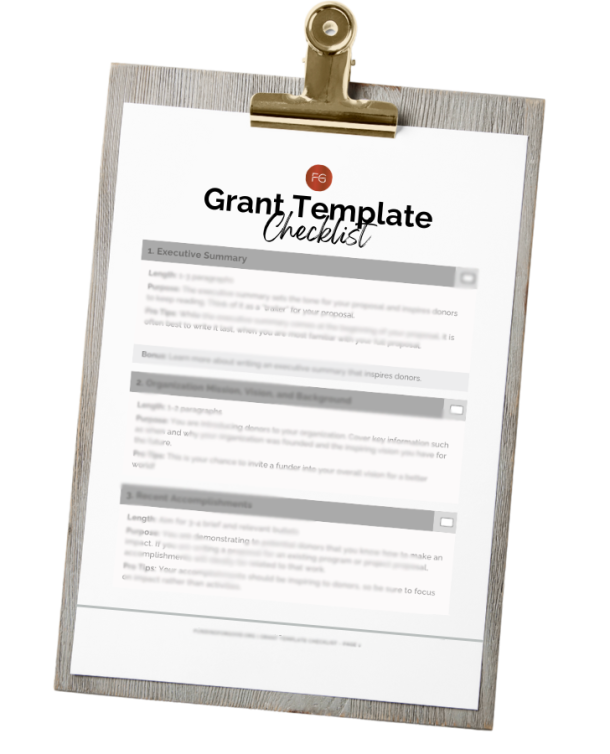
- Our free grant template checklist then guides you step by step on what to include in your template or boilerplate grant proposal—and how to make your proposal shine.
- For writing some of the thornier sections of grant proposals, we’ve also created detailed articles to help you out. You can learn how to develop a stellar statement of need, write a compelling executive summary, and answer tricky questions about funding sustainability.
If you want to learn even more about grant writing, our 12-part grant writing webinar series covers everything from budgeting to time-saving templates to program evaluation metrics.
5) Always Be Planning for the Next Step in Your Grant Fundraising Strategy: Reporting and Renewals
Once you’ve gotten that grant award, it’s tempting to sit back and focus on delivering a great program. But if you want to renew that grant funding, you need to keep up with your consistency in communications and reporting.
Track all grant deadlines and be sure you know when to reach out about renewals. Many organizations use donor management software to track grant deliverables, but if you only have a few funders even an Excel spreadsheet will work. For formal reporting deadlines, check out our guide to writing great grant reports.
Don’t wait for grant report deadlines to share your accomplishments, though!
Be sure you are sending regular impact updates to your program officers. Wherever possible, highlight the change you are creating—rather than the activities you are doing. Share stories of those helped by your organization. Let funders know if your work gets a front-page write-up in the local paper. If you host a successful community event or hit a grant milestone, share a quick recap with your funders!
Then, by the time your grant renewal conversation comes around, your program officer will already be up to speed and impressed by the incredible work you are doing!