


We are ALL looking for ways to save time while growing revenue. For nonprofits especially, a secret ingredient for successful fundraising is writing a grant proposal template before you apply for a single grant.
But what exactly is a grant proposal template, and how do you create one?
Here at Funding for Good, we get a lot of questions about grant templates. What is a grant template? How easy is it to write one? Do I still need to be a grant writer in order to create a good grant template?
Today, we’re answering those questions and more!
What is a grant proposal template?
A grant template is a grant proposal you do not write for a specific funder. Instead, you create a “template” proposal that includes answers to the most common questions grant-makers ask. This way, when you apply for a new grant, most of the work is already done for you!
Grant proposal templates can be for general support or to support a specific program or project. When you’re ready to get started, you can grab our guide for writing stellar grant templates.
Where can I find a fill-in-the-blank grant proposal template?
Anyone promising you a grant proposal template where all you have to do is fill in a few blanks is selling snake oil!
Here’s why:
- Your grant proposal template must describe the urgent needs your organization will be meeting. This is your statement of need, which should be backed up by data.
- Your grant proposal template must describe why your organization is uniquely suited to address this need—and articulate a clear strategy for doing so.
- Your grant proposal template must describe why your organization is uniquely suited to address this need—and articulate a clear strategy for doing so.
- Your grant proposal template must tell a compelling story about your programming. That means you need to connect need to strategy to outcomes—something a fill-in-the-blank proposal simply cannot do.
- Your grant proposal template needs to show that your program or project is smartly designed, with clear goals, strategies, and outcomes.
In other words, your grant proposal template needs to inspire donors to support your important work.
Remember, grant makers are reviewing dozens if not hundreds of proposals at a time. If your proposal sounds like it’s copied and pasted from someone else’s materials, grant reviewers will know.
Can AI or ChatGPT write me a grant proposal template?
The reasons above are also why asking ChatGPT to write you a template grant proposal from scratch will not work.
AI tools like ChatGPT can help you edit and organize existing content, but you must already know what you want to say and how you want to say it—and feed those words into your AI writing tool. Then, you must edit and customize the content produced by your AI tool.
If you’re using AI to help with grant writing, skipping these key steps will leave you with generic-sounding proposals that have a low chance of being funded because they are not customized to your community, your organization, and your funder audience.
How do I write a grant proposal template?
Your grant template needs to address the most common questions funders ask in grant proposals. These include:
- Describe your organization’s mission, vision, and background.
- Describe your organization’s or program’s recent accomplishments.
- Provide a well-researched statement of need.
- Clearly articulate your impact goals and strategies.
- Describe the activities you intend to undertake to achieve those goals.
- Outline a plan to evaluate progress toward your goals.
- Summarize your program need and goals in a concise executive summary.
You may also want to prepare a description of your organization’s commitment to diversity, equity, and inclusion.
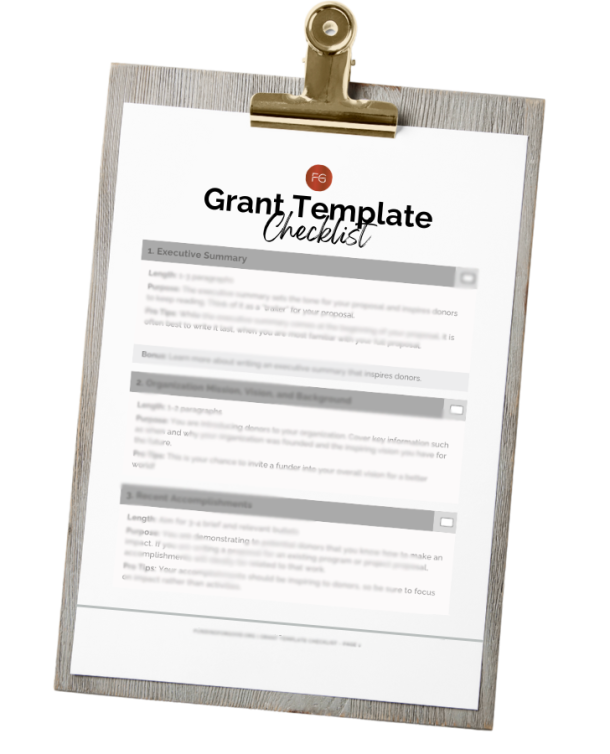
Our free Grant Proposal Template Checklist provides even more detail and pro tips on what to include in your template proposal.
How will writing a grant proposal template save me time?
A grant template saves you time by providing well-crafted answers to the most common questions funders ask. Because the grant template is written in advance, when you apply to a new funder you simply copy and paste content from your grant template into the funder’s guidelines.
You may have to do some editing to ensure the submitted proposal speaks to each funder’s interests. But this usually means changing only a few words here and there.
To save you time, your grant template should:
- Provide a powerful and comprehensive case for support, including needs addressed, measurable goals, strategies to achieve those goals, and plans for evaluation and sustainability. (Our Grant Template Checklist provides a full guide on how to craft each of these sections.)
- Reflect input from key stakeholders, such as program staff, department leads, organizational leadership, board members, and others.
- Be “ready to use” when applying to new or existing funders—meaning it’s proofread and has leadership signoff.
When should I write a grant proposal template?
There are a few key moments when many organizations write or update grant templates:
- January: Having a grant template fresh and ready to go by the end of January can give your annual fundraising a jumpstart. For the next several months, submitting grant proposals and renewals will be quick and easy. This leaves more time for other fundraising activities, like relationship-building, grant prospect research, and building out other revenue streams.
- July and August: Many funders have fall dockets, which means it’s worth taking the time to review your template proposal and make any key updates in advance. For example, maybe you’ve already hit some programming goals, experienced a major setback, or the landscape for your work has shifted.
- After Major Programming Changes or Wins: If your organization has just hit a major goal or seen an especially notable impact, go ahead and update your grant template proposal with this new and impressive accomplishment! As well, if your organization or program is undergoing major changes—such as scaling down goals and metrics due to unforeseen difficulties—it’s important to revisit your grant templates to ensure they are still accurate.
What about templates for grant reporting?
While “grant templates” usually refer to grant proposals, organizations can also benefit from creating templates for grant reporting—especially when it comes to year-end reporting.
Just keep in mind that grant reporting content generally needs to be updated more often than grant proposal content. This is because most funders want to know specifically what was accomplished during the term of their grant.
Where to find more grant writing resources
Here at Funding for Good, we are passionate about sharing everything we’ve learned about grant research and grant writing over our nonprofit and consulting careers.
If you’re looking for a deep dive into grant writing, our most comprehensive resource is our recently updated Grant Writing Self-Paced Training Series.